E-commerce

Start your own affiliate shop.

Merchants publish product feeds with their whole catalogue in them. MyFeeds turns those feeds into a real shop on your own site: categories to browse, filters like brand, colour and price, and a search box.

  • Your site, your design, your affiliate links
  • Categories, filters, search and sorting from the first day
  • Pages Google reads as a shop, not as a blog post

14-day money-back guarantee · Cancel from your dashboard

yourblog.com/shop
All products7 products

A much simplified demo, with clothing as the example. You pick the URL your shop lives at.

Why they come to you

Become the place your readers look first

No single merchant can show a shopper what the others have. Your shop can.

Brand ABrand BBrand CBrand Dand every other one you partnered up with
yourblog.com/shop

Everything you carry, under one search

A shopper looking for a winter jacket would otherwise open six shops and search each one. In your shop they type it once, and what all six of them have comes back together, under the same filters for brand, colour and price.

They compare without switching tabs

One merchant's jacket sits next to another merchant's jacket, with both prices on screen. A brand's own shop can only ever show its own rack. Yours shows the pick of several.

Your taste is the reason they return

You are not tipping a whole catalogue onto a page. You choose what is worth showing, in categories you named, and that judgement is what a shopper cannot get from a search engine. It is also what brings them back next season.

Your own shop, with your name over the door. A front page, categories to walk through, filters, a search box, and a URL people come back to. Your visitors browse the way they browse anywhere else, and every product they click goes out with your affiliate link.

What stays buried without a shop

Your feed holds a whole catalogue. Without a shop, your readers meet almost none of it.

One

Most of your catalogue stays hidden

A single feed can hold thousands of products. On a blog, the ones a reader can reach are the few in whatever article they happened to land on. The rest of the catalogue has no page to live on.

Two

Readers can read, but not browse

There is no way to narrow things down by colour or price, and no way to see what else you have. Someone who came ready to buy runs out of things to click and leaves.

Three

Shoppers search for pages you do not have yet

People type a kind of product into Google, not the title of your article. With no page for that kind of product, you have nothing for Google to show them.

01

Build your own online shop in minutes

Minutes, not a project. No theme to buy, no developer, and no second website to keep running.

One

Paste your product feed URL

A merchant you partner with publishes a product feed: one file with every product they sell, prices and stock included. You pick up its URL in your affiliate network. Paste it, and MyFeeds reads it.

Two

Name your categories

Clothing in this example, so Men, Women, Shoes. Put products in yourself, or let MyFeeds propose them and tick off what fits.

Three

Turn your shop on

Pick the URL it lives at, for example yourblog.com/shop. The shop goes live as a page on your own site, with its own sitemap for Google.

What your readers see

A shop your readers already know how to use

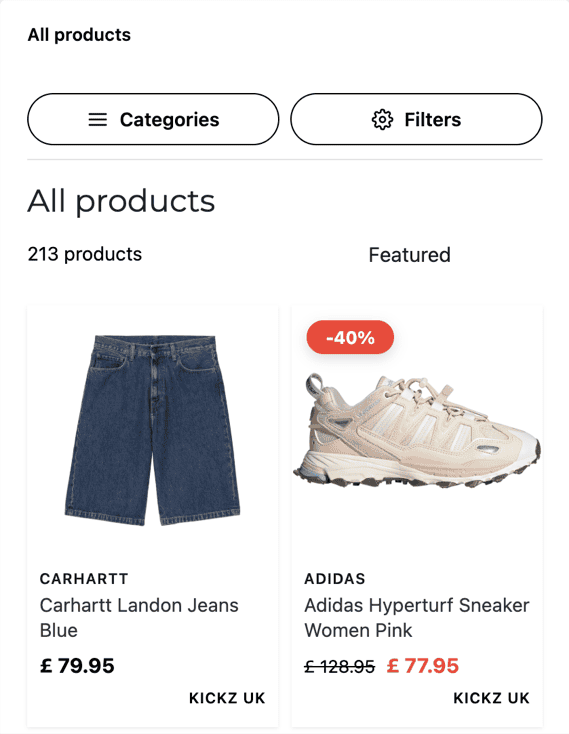
A menu of categories, filters like brand, colour and price, a search box, and sorting. Switch between laptop, tablet and phone to see the same shop on each.
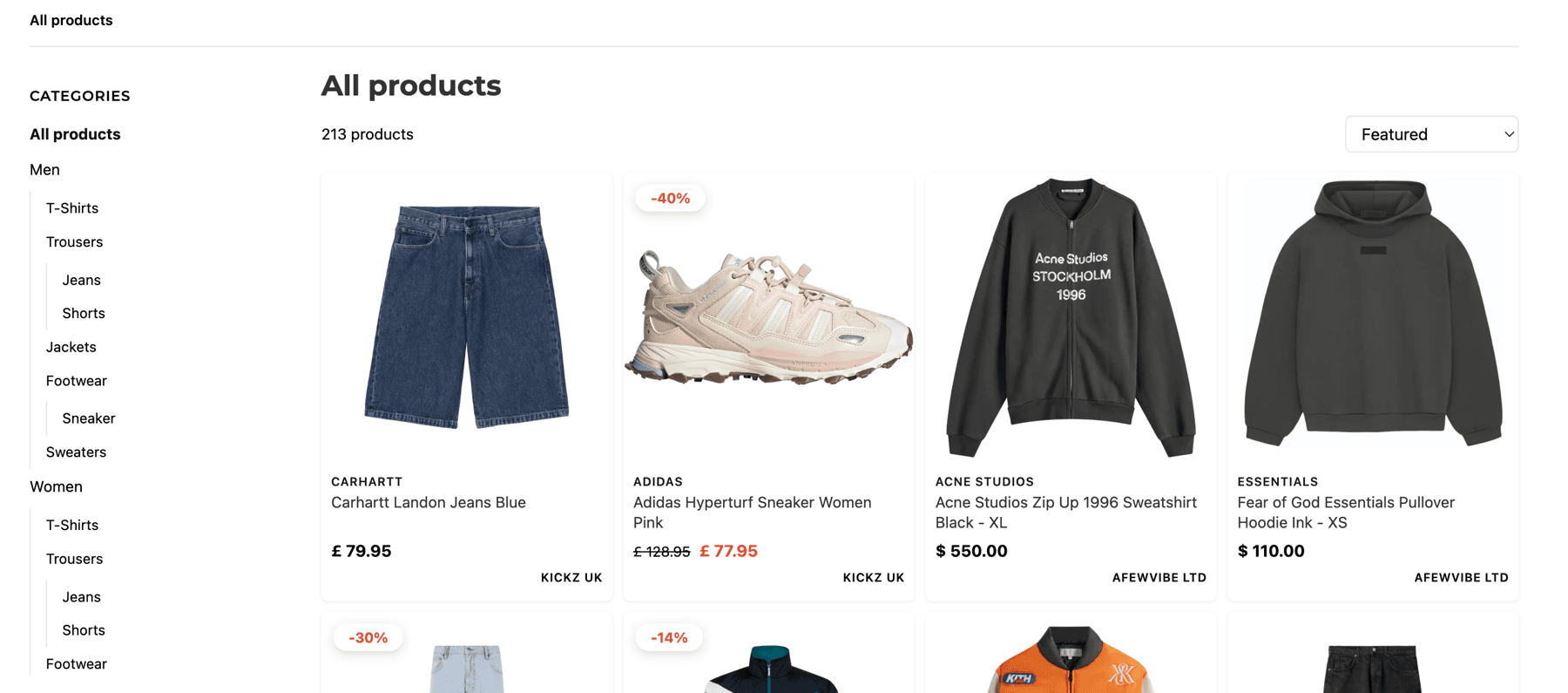
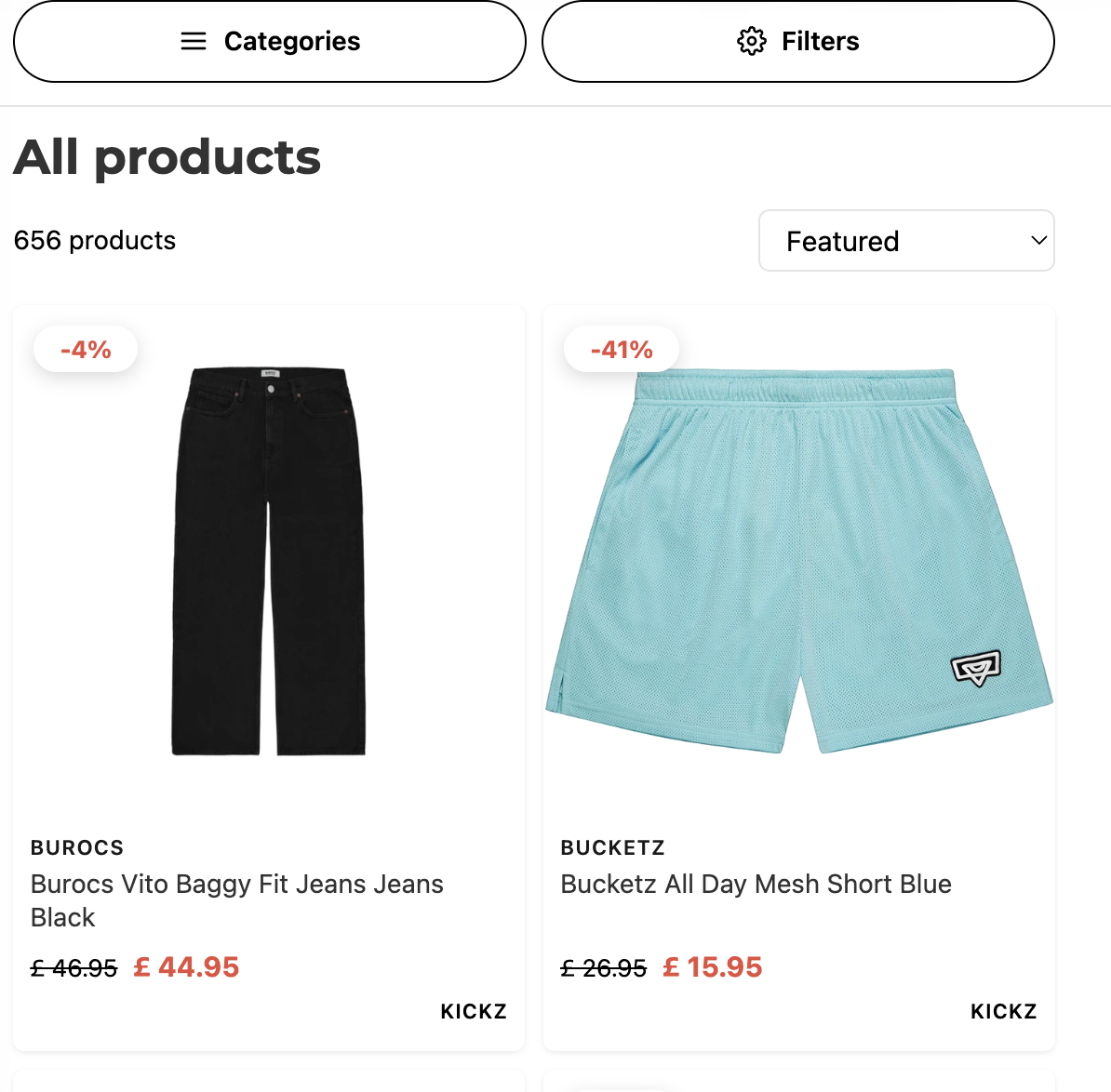
The storefront on a laptop: the list of categories on the left, brand filters, a search box and a grid of products The same storefront on a tablet: categories and filters as buttons above a two-column grid of products The same storefront on a phone: categories and filters as buttons above a two-column grid of products

They browse by category

The menu holds the categories you named, and a category can hold more categories. Clothing in this example, so Men, then Jackets inside it. Each one is a page of its own with its own URL.

They narrow it down

Filters like brand, colour, price range and merchant, each with the number of products behind it, so nobody clicks into an empty result. Sold-out products are left out by default.

They search and sort

A search box over your whole catalogue, and sorting by newest, by price, or by what your readers click most. You choose which one a visitor sees first.

They leave through your link

Every product goes out to the merchant with your affiliate link, and the click is counted on your own site first. You never handle a payment, a stock level or a parcel.

Your categories, your filters, your design.

Open my shop for 14 days, free →
02

What your shop looks like in the WordPress admin

Everything above is what your reader meets. This is where you steer it.

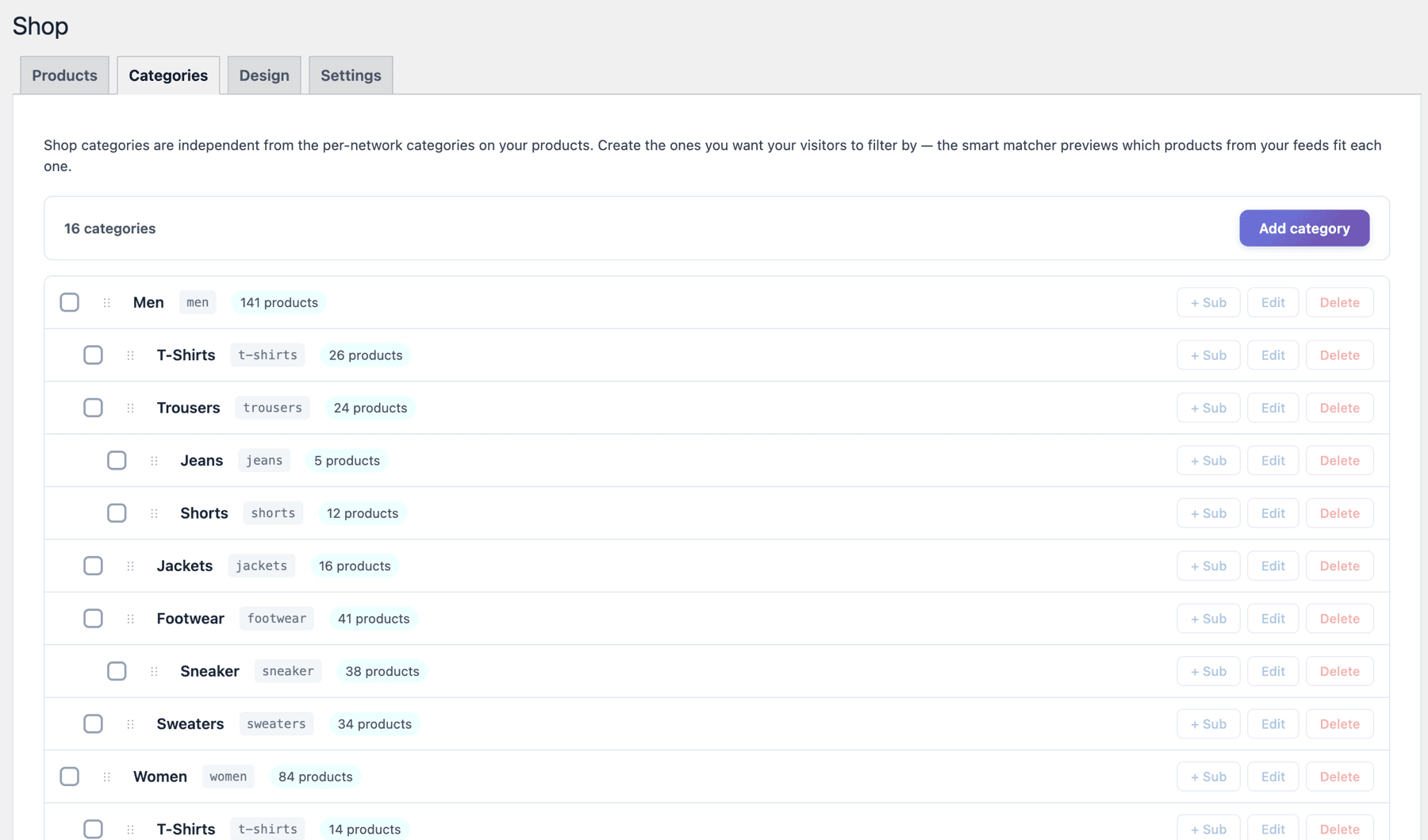
You sort products into categories

Name the categories your shop should have. Clothing in this example, so Men, Women, Shoes. A category can sit inside another one, so Men can hold Jackets, and Jackets can hold Rain Jackets. A car parts site would say Brakes, Filters, Tyres.

Nothing moves without you. Search your catalogue and put single products into a category yourself, one by one. Or let MyFeeds propose them by keyword, brand and feed and tick off the ones that fit. Only if you then turn rules on does a later import sort itself, and even then the matches wait for your approval.

Every category is a page with its own URL, its own heading and your own text above the products. Its title and description for Google are yours to set, on one category or on many at once. Rename a category and the old URL forwards to the new one, so nothing you had linked breaks.

The MyFeeds category editor: the list of categories on the left, the products of the selected category on the right

A shortlist inside a category

Jackets holds every jacket you have, all year round. What you want to point at in October is a handful of them. A style is that handful: you pick products out of one category and give the set a name. Fall Jackets inside Jackets, in this example. A car parts site might keep Winter Tyres inside Tyres.

"Style" is only the default word, and you can rename it to anything that fits what you write about: Looks, Collections, Editions, Seasons.

Your readers meet it in two places. It is a page of its own, with its own URL, your own words on it and its own title and description for Google, so it can be what you link to from a post. And it is a box in the filter list, so someone already looking at Jackets can switch it on and stay where they are.

You can pick every product by hand, or set rules like a brand, a colour, a price range or a word in the product name, and let MyFeeds collect the matches out of every later import. They wait on a list until you wave them through, so nothing turns up in your shop that you have not seen.

Off until you switch it on in the shop settings. A style can also stay out of the shop and be there only for you, when you place products in a post.

yourblog.com/shop/men/jackets/style/fall-jackets/

Make it look like your own

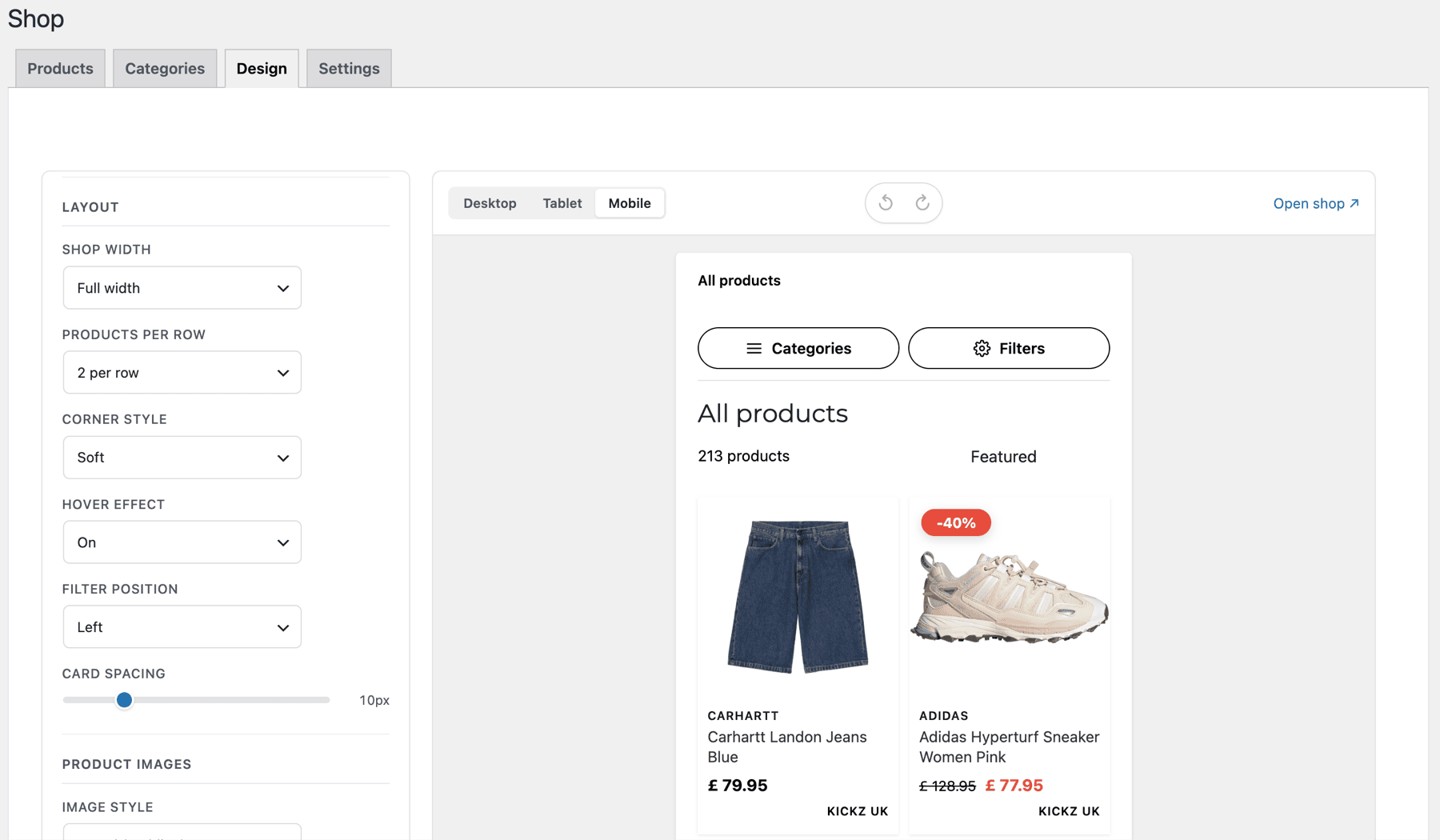
Set the colours, fonts, how many products sit in a row, what happens when someone points at a product, which side the filters are on, how big the pictures are and much more. Products per row is set separately for phone, tablet and laptop, so a phone is not a squeezed laptop.

A live preview sits next to the controls and follows every change as you make it, and it switches between laptop, tablet and phone. What you see there is the same card your visitors get, built by the same code.

No theme to buy and no code anywhere. You can put everything back to the defaults, and undo that too if you change your mind.

The MyFeeds shop design editor: controls on the left, a live preview of the storefront on the right

You see which products earn

Clicks per post, product and brand, how many people came, and the commissions your networks confirm, in one place instead of one login per network.

Every link out goes through your own site first, so the click is counted before the reader leaves. It keeps counting even when a visitor blocks scripts, which is where most click counters go quiet.

Products that have gone inactive, because the merchant stopped listing them, are flagged here too, together with the posts that still link to them, so you know what to fix first.

Clicks · 30 days24,531▲ 18%
Unique visitors7,842▲ 9%
Commission · approved$1,904▲ 22%
Discontinued flagged37
Clicks per dayHover a day
30 days agoToday

A simplified view with sample figures. Yours come from your own clicks and your own networks.

03

Google treats it like a real shop

Most affiliate setups never get this right. Here it comes with the shop.

yourblog.com › shop › men › jackets
Men’s Jackets – 143 products
$59.90 – $340.00In stock★★★★★

Google sees products, not a blog page

Every category page carries the extra information search engines read on shop pages: the products on it, their prices, their brands, and where the page sits inside your shop. Those sets of data have names you may meet elsewhere: CollectionPage, BreadcrumbList and ItemList.

/shop/men/jackets
/mens-jackets301 →

Addresses that keep working

Categories sit inside each other in the URL, one URL per page. Rename one and the old URL forwards to the new one for good, so links you or anyone else has already shared keep working.

Title
Description
12 categories at once

Your own titles and text

One pattern for the whole shop, changeable on any single category or on a batch of them together, and your own words above and below the products. Nothing is written for you and left that way.

<urlset>
  /shop/men/jackets/
  /shop/women/coats/
  /shop/men/shoes/

Its own sitemap

The shop and its categories go into a sitemap of their own that keeps itself up to date as you add and rename things. You hand it to Google once.

1234… every one a real page

Page two is a real page

A category with hundreds of products runs over several pages, and every one of them is an ordinary link with the products written into it. Nothing you sell sits behind a button a search engine will not press.

How it fits your site

The shop is a page on your own WordPress site, at a URL you choose. Everything in it comes from your affiliate feeds, and it is a place of its own: readers can land there straight from Google and browse without ever opening an article. When you do write about products, the posts and the shop draw on the same catalogue, so you keep one set of products, and a reader can reach them from an article or by browsing.

Nothing runs through us. The products sit in your own site, your own site serves the pages, and every click out carries your affiliate link.

What happens if you cancel →

The shop page stops being reachable for visitors. Your products, your feeds, your posts and the free plugin keep working exactly as before, and subscribing again brings the shop back the way you left it.

04

Before you start the trial

The questions people ask about the shop.

What is the shop exactly?

A real shop page on your own site. Your products sit in categories, visitors narrow them down with filters, search them and sort them, and every buy happens at the merchant through your affiliate link. You never take a payment or send a parcel.

Do I have to sort every product by hand?

No, and you are never forced into it either. Put single products into a category yourself, or let MyFeeds propose them by keyword, brand and feed and tick off what fits. If you then turn rules on, later imports sort themselves, and those matches wait on a list for your approval.

Does the shop change my blog?

No. The shop has its own URL, which you choose, and your posts stay untouched. Both draw from the same catalogue, so a product is there for whichever of the two you build first.

Can I make the shop look like my site?

Yes. Colours, fonts, products per row, the size and shape of the pictures, what happens when someone points at a product, which side the filters are on, how the pages are numbered and much more, all with a live preview next to the controls. No code anywhere.

What can I put in it?

Anything the merchants you work with publish as a feed: fashion, tech, home, beauty, garden, hobbies, parts. The plugin does not care what the subject is. If there is a product feed URL for you to copy, you can build a shop from it.

What are styles, and do I need them?

A style is a shorter, hand-picked list inside one category: Fall Jackets inside Jackets, in this example. It gets a page of its own and a box in the filters, so readers can switch it on where they already are. It is off until you switch it on, and a shop works perfectly well without it.

How long is the trial?

14 days with everything in it: the shop, the design editor, the SEO tools and the rules that sort your products. Cancel from your dashboard whenever you like. Anything you have already built stays as it is.

What happens to my things if I cancel?

The shop page stops being reachable for visitors. Your products, feeds, posts and the free plugin keep working. Subscribing again brings the shop back the way you left it.

Look like a shop, not a post full of links.

Fourteen days, full access. If it doesn't fit, you keep the free plugin and everything you built with it.

Open my shop for 14 days, free → or compare all plans