Guides · Earning with a blog
How to make money blogging in 2026.
A blog can still earn, and affiliate links can pay from the first sale. What works in 2026 is first-hand experience, readers of your own, and posts that help someone choose what to buy. Search alone is no longer a plan.
13 minute readNumbers with their sourcesFor blogs in their first years
Is blogging still worth it in 2026?
The short answer.
Yes, if you know your subject from doing it. A commission can come with your first sale. A full income takes longer, and part 2 has the numbers.
In short
- Affiliate links can earn from the first sale. They need no minimum traffic. Ads need traffic first, your own products readers who trust you, sponsored posts a loyal audience.
- Many blogs earn their first dollar in the first year. The median was 12 months in a 2026 survey with 129 respondents, and about one in four got there within six.
- Search sends fewer readers, and it is no longer the only way. Under an AI summary, people click a result about half as often, by Pew's measurement. About one in four bloggers in the survey named Pinterest as what helped their income most that year.
- One good source of readers is enough to start. Pick the one that fits your subject, and start an email list so those readers stay yours.
- It is not a way to a lot of money within months. Part 3 says who a blog fits.
Part 1 of 8
What changed for blogs since 2022?
Google answers more questions itself, and it tightened its rules for thin content.
If you have read that blogging is dead, this is where it comes from. For years a blog could live on one recipe: many how-to posts, visitors from Google, income from ads and links. Two changes broke it.
Google now answers many questions itself
Since 2024 Google has shown an AI-written summary, which it calls an AI Overview, above the results for many searches. A reader who gets the answer there has less reason to visit your post.
How much less is disputed.
Fewer clicks under a summary
- Pew Research Center tracked 900 US adults in March 2025. They clicked a result in 8% of searches with an AI summary, and in 15% without.
- Ahrefs compared 300,000 search terms. Under an AI summary, the top result got 58% fewer clicks than its model expected.
Clicks are “relatively stable”
In August 2025 Google said the total number of clicks it sends to websites had held year on year, with more of them going to forums, videos, podcasts and first-hand posts.
Google tightened its rules
In March 2024 Google added spam policies against content produced at scale to win rankings, whether people or software write it. Its guidance on helpful content warns against pages that mainly summarise what others have said.
What happened to 100 blogs
In 2026 Daniel Stanica, who runs the site Monetize Better, went back to 100 blogs held up as success stories in 2022, and compared their estimated search traffic then and now.
The median blog had lost 85% of its search traffic. Twelve had none left. Twenty-one had grown.
Median change in search traffic by topic, 2022 to 2026
What the blogs that grew have in common
Stanica names four traits. Every blog that held up had at least two.
- Experience a summary cannot replace. A recipe you tested, a pattern you made, a product you used.
- Readers of their own. An email list or a community, independent of Google.
- A name people search for. Readers look for the blog itself.
- A product of their own. Something readers buy from the blogger directly.
Part 2 of 8
How long does it take, and what do bloggers earn? For many, the first dollar comes in year one, and older blogs report far more.
These figures are from a yearly survey that publishes its method and its limits.
- First dollar
~12 months
The median. About one in four got there within six months.
- Full-time income
~4 years
The median for those who got there, by their own definition of full-time. About one in four did within two years.
Average monthly income by age of the blog
What 1,000 page views a month are worth
| Page views in a month | 1,000 |
|---|---|
| Google AdSense survey average per 1,000 page views | $3.26 |
| Journey by Mediavine survey average per 1,000 page views | $28.60 |
| Ad income for the month | $3 to $29 |
Ads only, rates from the same survey. Journey asks for about 1,000 sessions a month and a site four months old, so this blog starts at the lower figure.
| Page views in a month | 1,000 |
|---|---|
| Clicks on a product link assumption: 3 in 100 | 30 |
| Clicks that end in an order assumption: 5 in 100 | 1.5 |
| Value of those orders assumption: $80 each | $120.00 |
| Commission rate Amazon's published rate for clothing and shoes | × 4% |
| Commission for the month | $4.80 |
An example, not a measurement. We found no independent figures for the two click rates, so put in your own. At 10%, Amazon's rate for luxury beauty, the result is $12.00.
At 1,000 page views neither is an income yet. Both sums grow with your readers.
Who visits matters more than how many. The same traffic is worth more when readers are about to buy and the shop pays a higher rate.
Part 3 of 8
Is a blog the right tool for you?
It fits when you can show what you use. Three plans it does not fit.
When you can show, and let it grow
- You know your subject from doing it, and can photograph or test what you write about.
- You can let it grow beside what you do now. In the survey the median first dollar came after twelve months, and about one in four got there within six.
- You would write about it anyway.
When one of these is your plan
- You need a lot of money within months. Work for clients pays by the job, and a small blog can be your portfolio.
- You plan to publish AI-written posts in bulk. Google's spam policies cover that.
- Your plan rests on Google alone, in a hard-hit topic such as finance or health.
Part 4 of 8
How do bloggers actually make money?
In four main ways. Each starts to earn at a different point and asks something different of you.
| Income source | Starts to earn | Depends on | The limit |
|---|---|---|---|
| Display ads | When an ad network accepts you: Journey from about 1,000 sessions a month, Raptive from 25,000 page views | Page views | Cents per visit, and it shrinks when search traffic does |
| Affiliate links | With the first sale. No traffic minimum, but each programme chooses its affiliates | Readers who are about to buy | The shop sets the rate and can change it |
| Your own products | When readers trust you enough to pay you directly | Readers you can reach again, usually by email | The most work before the first sale |
| Sponsored posts | When a brand wants to reach your readers | A clear subject and a loyal audience | Irregular, and each post has to be labelled as paid |
Entry levels as reported for Journey in January 2026 and by Raptive in October 2025. They change.
Which one first
Start with the one that fits the posts you already write. If they help people choose things to buy, that is affiliate links (part 5). If they answer questions for many readers, ads follow once the traffic is there.
A product of your own comes last. Respondents who mainly sell digital products reported the most per page view in the survey, but a product needs readers before it sells.
Part 5 of 8
Does affiliate marketing still work?
Yes, in posts that help someone decide what to buy.
In the 2026 survey, respondents whose main income is affiliate links reported about as much per 1,000 page views as those whose main income is ads: $34.66 against $33.16.
How it works
You recommend a product and link to it. A code in the link tells the shop the reader came from you. If the reader buys within the programme's time window, you are credited a share of the sale.
Each programme sets its own rate and window. Awin says most windows last 30 days; at Amazon a click counts for 24 hours.
Shops run these programmes through affiliate networks such as Awin, CJ or Rakuten; Amazon runs its own. To get a link, you sign up with a network, apply to a shop's programme and wait until the shop accepts you. The network then gives you your own link to that shop.
Mistakes that cost commissions
- Linking where nobody is buying. Links earn in a comparison, a review or a gift list. In a post that explains a term, few readers are about to buy.
- Never going back. Shops change prices, sell out and drop products, and a post that was right in March can lead to a dead end by June. More in why affiliate posts stop earning.
Every dead link is a commission you earned and never received.
- Building on one programme. A shop can change its terms whenever it likes. Two or three programmes spread that risk.
Amazon in 2026. Amazon changed its programme terms on 14 April 2026. A sale that starts from an advert you paid for or boosted, a promoted pin for example, no longer earns a commission, with limited exceptions. Its published rates sit between 1% and 4.5% for most categories.
Where the link goes in your post
- In a sentence. Enough for a passing mention.
- On a photo. When a post starts from a picture, such as an outfit, a room or a desk, readers ask where each thing is from. By hand, a numbered list under the picture does the job. MyFeeds, the plugin we make, has a block for your own photo, with a dot on every product.
- On a shop page. When readers want to browse everything you recommend. A bigger project, and its guide says when to leave it: building an affiliate shop in WordPress.
- In a roundup or a review. Here the product is the point, so show it. Part 6 compares two ways.
Part 6 of 8
Text links or product cards? The same picks, shown twice.
Style notes
My fall uniform
Things I reach for most mornings:
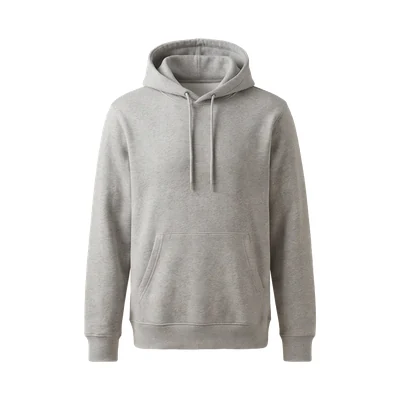
- Boxy Heavy Tee Off-White at Northside Supply
- Court Low-Top Leather White at Kicks Corner
- Ribbed Merino Beanie Navy at Basecamp Outfitters
Style notes
My fall uniform
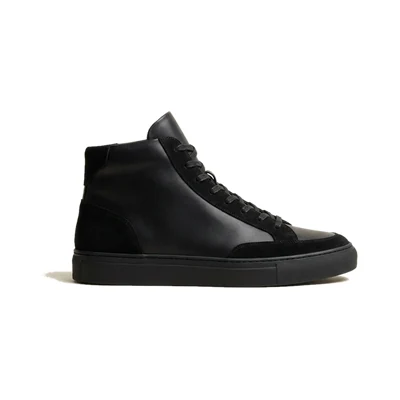
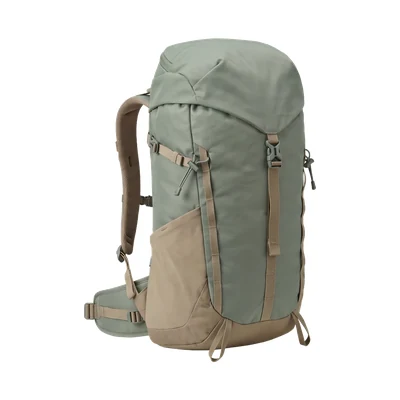
Things I reach for most mornings. Tap a card to see it in the shop.

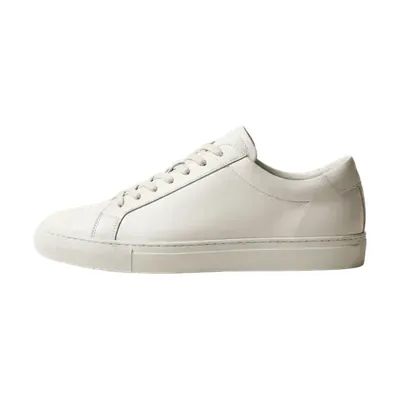
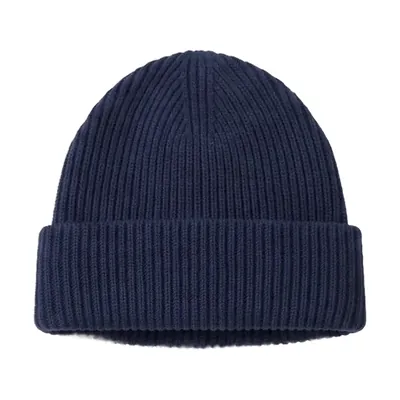
A text link never promised a price. A card does, so something has to keep it current.
Do cards earn more?
We found no independent study that compares the two. The tests that exist come from makers of affiliate plugins, and they measured clicks, not sales.
So test it: rebuild one post that already gets visitors, and compare a month of clicks before with a month after.
Two ways to make the cards
By hand. Each product needs a picture you are allowed to use, a typed price and your link. That works for a handful of posts. Every price change sends you back in.
From the shop's product feed. That is the shop's own list of its products, passed on to you by your affiliate network. A plugin reads it and you pick from it. If the plugin reads the list again on a schedule, price and link follow the shop.
MyFeeds is the plugin we make, and it works the second way. Where it stops, so you can rule it out quickly: it runs on WordPress, in the block editor only. You need the product feed of a shop that has accepted you as an affiliate. Amazon has no feed: its products need the Pro plan, and show without picture or price until Amazon gives you access to its product data.
Part 7 of 8
How do you get readers to a blog now?
None of this earns without readers. Search, Pinterest and email each do a different job.
The one thing that helped income most, by share of respondents
Search: still first, no longer enough
Write for search the way Google describes: make clear who wrote the post, how you know, and what you tested. Google says its AI summaries need nothing extra from you.
Rely on it less. Treat a visitor from search as a first meeting, and give them a reason to come back without Google.
Pinterest: visual and long-lived
Pinterest reported 640 million monthly users in mid-2026. Its help pages say a pin has no fixed lifespan and can gain attention months or years after you publish it.
Pinterest sends the reader; the earning happens on your blog. Affiliate links are allowed on pins as well, under Pinterest's conditions.
Email: readers nobody can take away
An email list is the one audience that does not pass through somebody else's algorithm. Start it with your first post.
Part 8 of 8
What should you do in the first twelve months?
Five steps. The order matters more than the months. If you already have a blog, start at step 3, with the posts that still get visitors.
-
Months 1 to 3: choose what you can show
Pick a subject where you do the thing yourself: cook it, build it, wear it, test it. Write the first ten posts from that experience, with your own photos.
-
From the first post: collect email addresses
One sign-up box, and one short mail whenever you publish.
-
Months 3 to 6: write what people read before they buy
Comparisons, reviews of things you own, lists with a job, such as a packing list or a gift list. Join the affiliate programmes of two or three shops you already buy from. Add the links and the disclosure.
-
Months 6 to 9: build up the source that sends readers
See where your readers come from, and do more of that first. If your subject is visual and you are not on Pinterest yet, start there, with a pin for each post you have. If it has to be seen in motion, make a short video.
-
Months 9 to 12: look at what was clicked
Check your affiliate network's reports for what was clicked and what sold; the detail varies by network. Update those posts first, then write more like them. Once you pass about 1,000 sessions a month, apply to an ad network.
If month twelve ends with your first commissions, you are on the survey's usual path: the median first dollar came after twelve months, and each older group of blogs averaged more than the one before.
Questions people ask
How much traffic do you need to make money from a blog?
None to start, a lot to live on. Affiliate links can earn from the first sale. In the 2026 survey, blogs under 5,000 monthly page views averaged about $52 a month, and blogs with 25,000 to 49,999 about $990.
How many blog posts do I need before monetizing?
There is no number. You can add affiliate links to the first post that recommends something. In the survey, blogs under 100 posts averaged under $40 a month, blogs with 100 to 299 nearly $2,000.
Do affiliate links hurt SEO?
Not by themselves. Google's spam policies say that taking part in an affiliate programme does not make a site thin. Mark the links as paid and add your own view of the product.
How do you make money blogging with AI?
By using it as a helper. Google does not ban AI-written text, but its spam policies cover content produced at scale to win rankings. The part that earns is what software cannot supply: what happened when you used the thing yourself.
And two shorter ones
Do I need a blog for affiliate marketing?
No. Pinterest, for one, allows affiliate links directly on pins. A blog gives you a place you own, where one post can collect readers from search, Pinterest and email at once.
Do I have to pay taxes on my blog income?
That depends on where you live and how much you earn. Ask an accountant or your tax office before the first payout. This guide cannot advise you on it.
Sources (22)
- The great blogging collapse: what happened to 100 successful blogs?, Daniel Stanica First published June 2026, page dated 26 August 2026. Semrush estimates, April 2022 against April 2026. A cohort study, not a sample.
- Google users are less likely to click on links when an AI summary appears in the results, Pew Research Center 22 July 2025. 900 US adults, 68,879 searches.
- Update: AI Overviews reduce clicks by 58%, Ahrefs 4 February 2026. Compared with a modelled baseline, not an observed one.
- AI in Search is driving more queries and higher quality clicks, Google 6 August 2025.
- New ways we're tackling spammy, low-quality content on Search, Google 5 March 2024. Content produced at scale.
- Creating helpful, reliable, people-first content, Google Last updated 5 October 2026.
- Spam policies for Google web search, Google Last updated 28 August 2026. Thin affiliation, scaled content abuse.
- How much do bloggers really earn in 2026? Blogging income survey 2026, Productive Blogging Last updated 28 May 2026. 129 self-selected respondents.
- Everything you need to know about Journey by Mediavine, Productive Blogging 19 January 2026. The entry level for Journey.
- Opening the door to more creators who meet Raptive quality standards, Raptive Updated 16 October 2025. The 25,000 page views.
- Associates Program standard commission income statement, Amazon The rate table, undated, as shown in October 2026.
- Associates operating agreement: what's changed, Amazon Effective 14 April 2026.
- Associates Program policies, Amazon Updated 14 April 2026. The 24 hours.
- Cookie tracking: publisher FAQs, Awin The 30 days, as shown in October 2026.
- FTC's Endorsement Guides: what people are asking, US Federal Trade Commission Disclosing affiliate links.
- Qualify your outbound links to Google, Google Last updated 10 December 2025. Sponsored is preferred, nofollow still accepted.
- A reminder on qualifying links and our link spam update, Google 26 July 2021. Asks affiliate sites for rel="sponsored".
- Link control, WordPress documentation The Mark as nofollow switch.
- AI features and your website, Google Last updated 10 December 2025.
- Pinterest announces second quarter 2026 results, Pinterest 4 August 2026, filed with the SEC. The 640 million.
- Pin performance and distribution, Pinterest Business help How long a pin lasts.
- Commercial and branded content guidelines, Pinterest Last updated April 2025. The affiliate guidelines.
Where to go next
Pick your next step.
Let your next post show what you recommend.
Free on WordPress.org for one shop's feed. Paid plans each start with a free trial.
Want to see the plans first? Compare the plans.